
Babywearing can be a game-changer for parents and caregivers. It keeps your baby close, frees up your hands, and makes everyday activities a little easier. Whether you're soothing a fussy newborn, heading out for a walk, or trying to get something done around the house, a baby carrier can be an incredibly useful tool.
But if you've ever put on a baby carrier and wondered, Am I doing this right?, you're not alone!

Babywearing is a skill, and like any new skill, it takes a little practice. Even experienced parents can run into challenges when trying a new carrier or adjusting to their growing baby.
The good news? Most common babywearing mistakes are easy to fix with a few simple adjustments.
Let's walk through some of the most common babywearing mistakes and what you can do to make carrying your baby safer, more comfortable, and more enjoyable for both of you.
1. Wearing Your Baby Too Low
One of the most common mistakes we see is a baby positioned too low on the caregiver's body.
When your baby sits too low, the carrier may pull on your shoulders and back, making babywearing uncomfortable. It can also make it harder to monitor your baby's face and breathing.
How to fix it:
A helpful rule of thumb is to keep your baby "close enough to kiss." When you gently tilt your head forward, you should be able to kiss the top of your baby's head without straining.
Try tightening or repositioning your carrier so your baby sits higher on your chest. For buckle carriers, adjusting the waistband and shoulder straps can make a big difference.
Remember, your baby should feel snug against your body, not like they're hanging away from you.

2. Leaving the Carrier Too Loose
It's understandable to worry about making a carrier too tight, especially when you're wearing a newborn. But a carrier that's too loose can actually be uncomfortable and unsafe.
Excess fabric or slack can allow your baby to slump into an unsupported position. This may cause their chin to drop toward their chest, potentially restricting their airway.
A loose carrier can also put unnecessary strain on your shoulders and lower back.
How to fix it:
Your carrier should be snug enough to support your baby's body and keep them comfortably upright against you.
If you're using a stretchy wrap, make sure the fabric is evenly tightened and follows the manufacturer's instructions for the carry you're using.
If you're using a buckle carrier, check that the straps are adjusted to eliminate unnecessary slack without compressing your baby's body or restricting their breathing.
Think of it as a supportive hug: secure and comfortable, but never restrictive.
3. Forgetting About Baby's Airway
This is one of the most important parts of safe babywearing, especially for newborns and young infants.
Your baby's face should always be visible and free from fabric, clothing, or anything else that could interfere with breathing.
A baby's chin should never be pressed down against their chest, and their face should not be buried against the caregiver's body.
How to fix it:
Before you start moving, take a moment to check your baby's position:
Can you easily see your baby's face?
Are their nose and mouth uncovered?
Is their head supported without forcing their chin toward their chest?
Can you comfortably kiss the top of their head?
Continue checking your baby's position and breathing while you're wearing them, including when they fall asleep.
If you're unsure whether your baby is positioned safely, take them out of the carrier and reposition them before continuing.
4. Not Supporting Baby's Hips and Legs Properly
Have you ever noticed a baby in a carrier with their legs hanging straight down?
Depending on the baby's age, size, and the carrier being used, this can be a sign that the carrier isn't providing appropriate support.
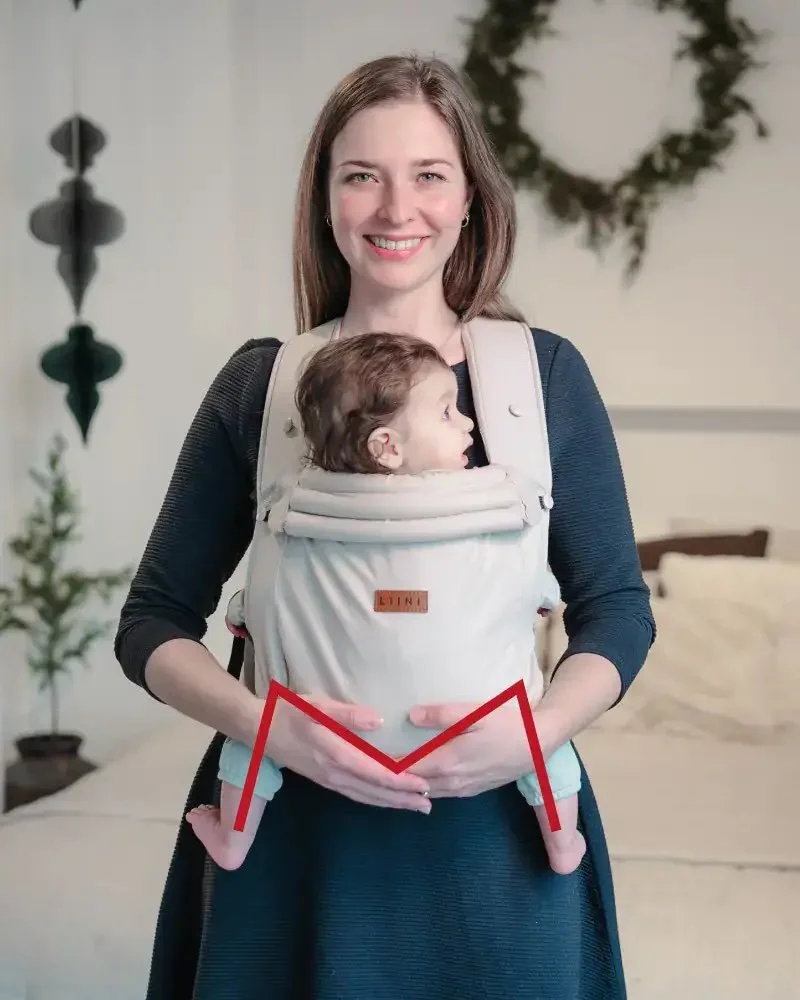
For many babies in a front inward-facing carry, a comfortable position allows their knees to be slightly higher than their bottom, creating what's often called an "M-position."
How to fix it:
Check that your carrier provides appropriate support across your baby's bottom and thighs, without forcing their hips or legs into an uncomfortable position.
For an adjustable buckle carrier, this may mean changing the width of the seat to accommodate your baby's size.
For a wrap or ring sling, it may mean carefully spreading the fabric to create a supportive seat.
The goal is to support your baby's natural positioning rather than forcing their legs into a particular shape.
Every baby and carrier combination is different, so it's important to follow the carrier manufacturer's instructions for your baby's size and stage of development.
5. Using a Carrier That Doesn't Fit Your Baby (or You!)
Not every carrier works for every baby or every caregiver.
A carrier may be advertised as suitable from birth, but that doesn't necessarily mean it will fit every newborn well without adjustments or additional components.
Similarly, a carrier that works beautifully for one parent may feel awkward or uncomfortable for another.
How to fix it:
Start by checking your carrier's recommended weight and size limits, along with any developmental requirements for different carrying positions.
Make sure your baby's face stays above the carrier panel and that their head and neck are adequately supported.
Then take a look at your own comfort. Are the straps digging into your shoulders? Does the waistband feel awkward? Are you constantly readjusting?
Sometimes small changes make all the difference. Other times, a different carrier style may be a better fit for your body and your baby's needs.
You don't necessarily need to buy a new carrier. A personalized fit check can help you figure out whether the carrier you already own can work better for you.
6. Ignoring Your Own Comfort
Babywearing should feel good for both you and your baby!
While there's often an adjustment period when learning a new carrier, ongoing pain or discomfort isn't something you should simply push through.
Shoulder tension, back pain, and pressure around the waist can all be signs that your carrier needs adjusting.
How to fix it:
First, check your baby's positioning. A baby who is too low or too far from your body can make a carrier feel much heavier.
Next, look at how the carrier distributes weight across your body.
Depending on your carrier, adjusting the waistband, tightening the shoulder straps, or spreading wrap fabric more evenly may improve your comfort.
And remember that your comfort matters, too! A carrier that works well should support your baby without leaving you feeling strained or exhausted.

7. Assuming Babywearing Should Come Naturally
This might be one of our favorite mistakes to address, because it's more about expectations than technique.
There's a common assumption that babywearing should be intuitive. You put your baby in a carrier, fasten a few buckles or tie a wrap, and you're good to go.
But the reality is that babywearing takes practice!
There are different carrier styles, different adjustments, and different techniques. Babies also grow quickly, which means a setup that worked beautifully a month ago may need to change.
How to fix it:
Give yourself permission to learn.
Practice with your carrier when your baby is calm and fed. Start with short wearing sessions and gradually build your confidence.
Use your carrier's instructions and recommended safety guidance, and don't hesitate to ask for help.
Working with a trained babywearing educator can take the guesswork out of the process and help you find a comfortable, secure fit without spending hours troubleshooting on your own.
You Don't Have to Figure Out Babywearing Alone
Babywearing can be a wonderful way to bond with your baby while making everyday life a little easier. But it's completely normal to need some guidance along the way.
Whether you're struggling with a stretchy wrap, trying to adjust your buckle carrier, or wondering which carrier is right for your growing baby, a few personalized adjustments can make a world of difference.
At Milk In Motion, we believe babywearing should feel empowering, not overwhelming. As lactation consultants and babywearing educators, we're here to help you feel confident, comfortable, and connected with your baby.
Need help getting the perfect fit?
Book a babywearing consultation with Milk In Motion! Together, we can troubleshoot your current carrier, explore your options, and find a babywearing setup that works for you and your little one.
Because babywearing isn't about getting everything perfect the first time. It's about finding what works for you and your baby, one adjustment at a time.