
Ring Sling, Wrap, or Structured Carrier: Which Is Best for Your Family?
Trying to choose between a ring sling, a wrap, and a structured baby carrier? One friend loves her sling. Another swears by a wrap. This guide breaks down the differences—including stretchy versus woven wraps—with familiar brand examples and practical tips to help you find the right fit for your family.
Here’s the reassuring part: there isn’t one carrier that’s best for every family. Your baby’s size, your comfort, and how you plan to use it matter more than which carrier everyone else is buying. A carrier that feels wonderful on one person may need different adjustments—or simply be the wrong fit—for another.
Ring Slings: Compact and Convenient
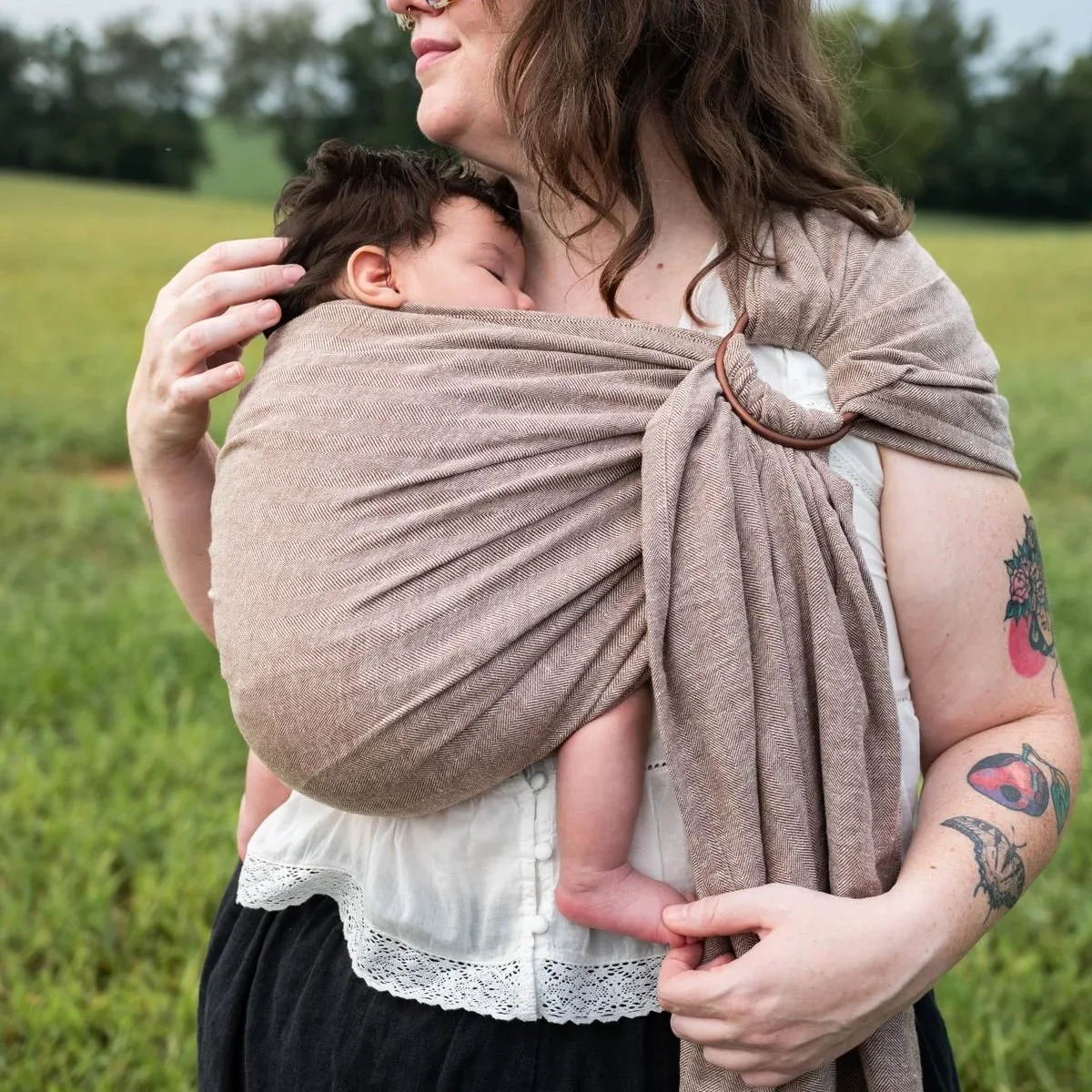
A ring sling is a length of fabric threaded through two rings and worn over one shoulder. You adjust the fabric to create a snug, supportive fit around your baby. Examples include the WildBird Ring Sling and hope&plum Ring Sling.
One of its biggest advantages is convenience. Once you’re comfortable using it, a ring sling can be quick to put on and easy to tuck into a bag. It’s worth considering for short outings or an older baby or toddler who wants to be picked up and put down frequently.
The trade-off? Simple-looking doesn’t always mean intuitive. Learning to tighten the fabric evenly and position your baby securely takes practice. Because the fabric sits over one shoulder and across your back, consider how that one-sided design feels on your body, especially during longer stretches of carrying.
A good starting point for: Parents who value portability and frequent, shorter carries—and don’t mind practicing the adjustments.
Baby Wraps: Stretchy vs. Woven

A wrap is a long piece of fabric that you tie around yourself and your baby. There are two main types: stretchy wraps and woven wraps. They may look similar at first glance, but the fabric behaves differently.
Stretchy wraps: Think soft, stretchy T-shirt fabric
Examples include the Solly Baby Wrap, MOBY Classic Wrap, and Boba Classic Wrap. These use soft fabric with stretch, allowing it to mold around you and your baby for a close fit.
Stretchy wraps can be especially appealing during the early months, when you’re looking for that snug, held-close feeling without buckles. As your baby gets heavier, you may prefer the firmer support of a woven wrap or another carrier—even before reaching your stretchy wrap’s maximum weight limit.
There’s still a learning curve. You’ll need to practice tying the wrap and getting the tension right. Follow the instructions for your particular wrap, including its size requirements, required fabric layers, and permitted carrying positions.
Woven wraps: Think supportive woven fabric, without the elastic bounce
Examples include woven baby wraps from Didymos and Oscha. These brands also sell other carrier styles, so look specifically for their woven wraps.
Picture a long, supportive woven scarf rather than stretchy T-shirt fabric. A woven wrap can still be soft and flexible, but it doesn’t have the same elastic bounce. That firmer support makes it an option that can grow with your child, from the newborn stage through toddlerhood, with an appropriate wrap and tying technique. “Woven” does not mean it’s only for older babies.
Woven wraps offer a highly customizable fit, but learning to manage and tighten the fabric takes practice. They’re worth considering when you enjoy the idea of learning different ways to carry as your baby grows.
A good starting point for: Parents who enjoy a fabric-based, customized fit and are willing to spend some time learning the technique.
Soft Structured Carriers: Buckles and Everyday Support
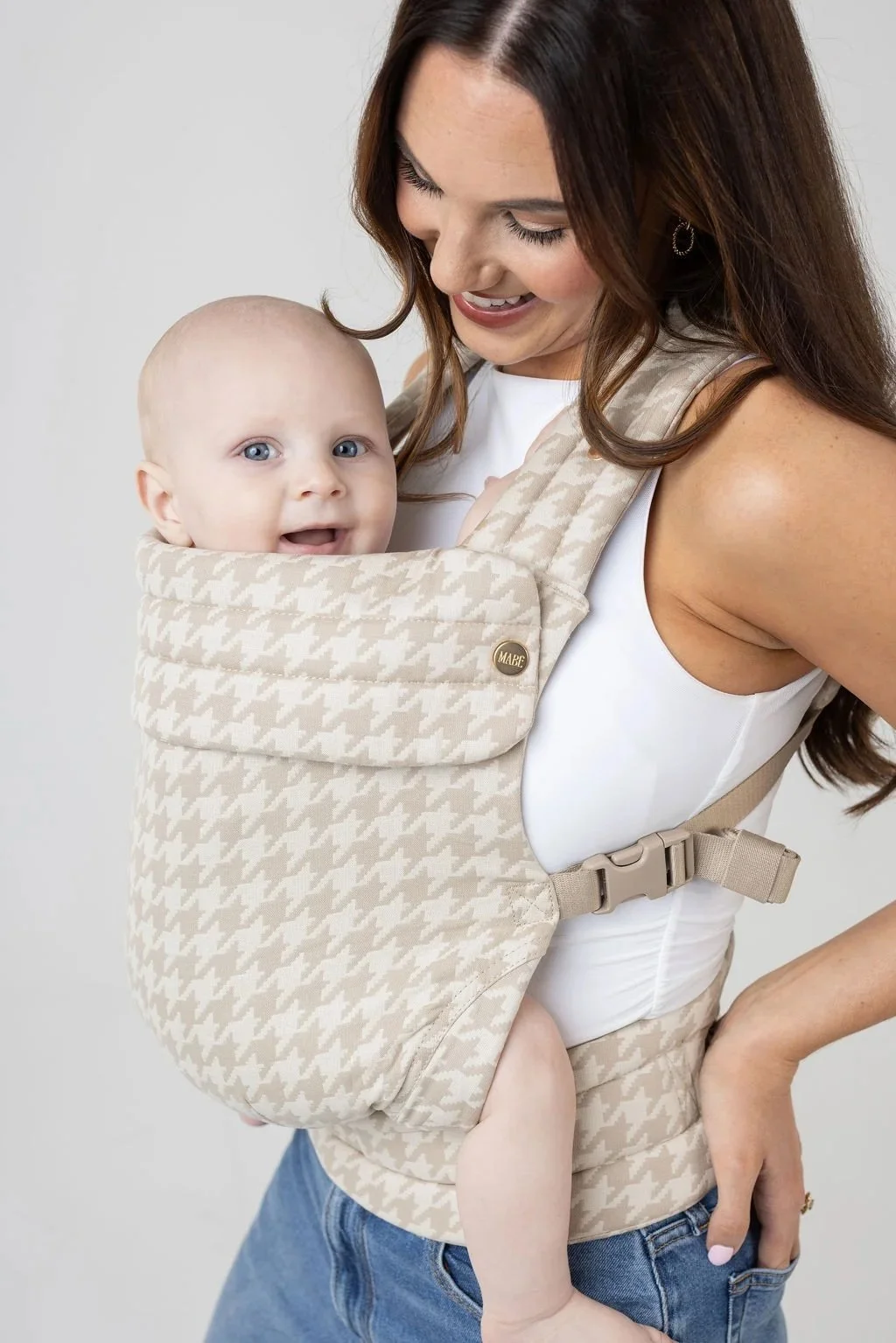
A soft structured carrier usually has a fabric body panel, two shoulder straps, and a waistband that fastens with buckles. “Structured” doesn’t mean a rigid hiking backpack—it generally means the carrier already has its shape, rather than being tied from a length of fabric.
Examples include the Ergobaby Omni Deluxe Baby Carrier and Tula Explore Baby Carrier. Both have adjustable straps and a supportive waistband, rather than the long fabric tails you tie when using a wrap.
These carriers are worth trying when you prefer buckles to wrapping or expect to do longer walks and outings. The shoulder straps and waistband help distribute your baby’s weight, and many models offer adjustments as your baby grows.
Pay close attention to newborn fit. Check the exact model’s minimum size, positioning instructions, and whether an infant insert is required. A carrier’s brand name alone won’t tell you whether it is appropriate for your baby.
A good starting point for: Parents who prefer a buckle-based setup and want an option for regular outings or longer carries.
How to Choose a Baby Carrier
Start with your actual day, not someone else’s favorite carrier.
Are you imagining short trips between the car and preschool pickup? Walks around the neighborhood? Carrying a growing baby who wants to be up, down, and up again?
Then try a few styles, ideally with guidance. Check whether you can reach the adjustments, whether anything digs in, and whether your baby is securely supported. When more than one caregiver will use the carrier, each person should try it and learn their own fit adjustments.
The products above are examples, not a ranking. You don’t need one of everything. Start with a carrier that meets your needs now, rather than trying to solve every possible future stage.

Safety Matters More Than Carrier Style
Follow your carrier’s instructions and size requirements. For a young baby carried on your front, the TICKS checklist is a useful reminder:
Tight: Snug enough to prevent slumping, without restricting breathing.
In view at all times: Your baby’s face stays visible, with the nose and mouth uncovered.
Close enough to kiss: Your baby sits high enough that you can easily kiss the top of their head.
Keep chin off chest: Avoid a curled position that can restrict the airway.
Supported back: Your baby is supported upright rather than sagging into the carrier.
Check your baby’s position and breathing regularly, not just when you first put them in.
Look for supported thighs and a comfortable bent-knee position, with the knees around the level of—or slightly higher than—the bottom.
Babies under four months need particular care because of their limited head control. For a baby born prematurely, with a low birth weight, or with a medical condition, speak with their pediatrician before using a carrier.
Find Your Fit: Babywearing Support in Northern Virginia
You don’t have to figure it out alone. At Milk in Motion, we help Northern Virginia families compare carriers, practice positioning, and get personalized fit support from a certified babywearing educator. Bring a carrier you already own, or try different styles with our guidance.
The goal isn’t to find the trendiest carrier. It’s to help you feel comfortable and confident carrying your baby.
Book a babywearing consultation with Milk in Motion, and let’s find your fit.