
Why Is My Pump Not Emptying Me? Common Reasons & What to Try
You sit down to pump, get everything set up, and wait for the milk to start flowing. Maybe it starts well but slows down quickly. Or maybe you finish the session and still feel full, heavy, or uncomfortable.
If that sounds familiar, you are not alone.
It can be frustrating to feel like your pump is not emptying you — especially if you are pumping at work, exclusively pumping, building a freezer stash, or replacing a nursing session. It can also feel stressful if your output suddenly looks lower than usual.
But here is the reassuring part: this does not automatically mean your milk supply is dropping. Often, it simply means that something about your pump setup, flange fit, schedule, or pumping technique may need adjusting.

Start With Flange Fit
One of the first things to look at is flange fit. Your flange is the part of the pump that fits over your nipple and breast. If it is too large or too small, your pump may not remove milk well. A poor fit can also cause pain, rubbing, swelling, nipple damage, or lower output.
Flange size can also change over time. The size that worked well early postpartum may not be the size that works best later. If pumping suddenly feels different, your output has changed, or one side is not responding as well as the other, it may be time to reassess your flange size.
You May Need More Than One Letdown
Another common reason your pump may not be emptying you is that your body may need more than one letdown.
A letdown is the release of milk. Some parents have one strong letdown at the beginning of a pumping session, while others need to trigger two or more letdowns to feel well drained. If your milk flows at first and then slows down, that does not always mean the session is over.
You can try going back to stimulation mode once the flow slows, then switching back to expression mode when milk begins flowing again. Gentle breast compressions, light massage, looking at photos or videos of your baby, or creating a calmer pumping environment may also help.
Check Your Pump Parts
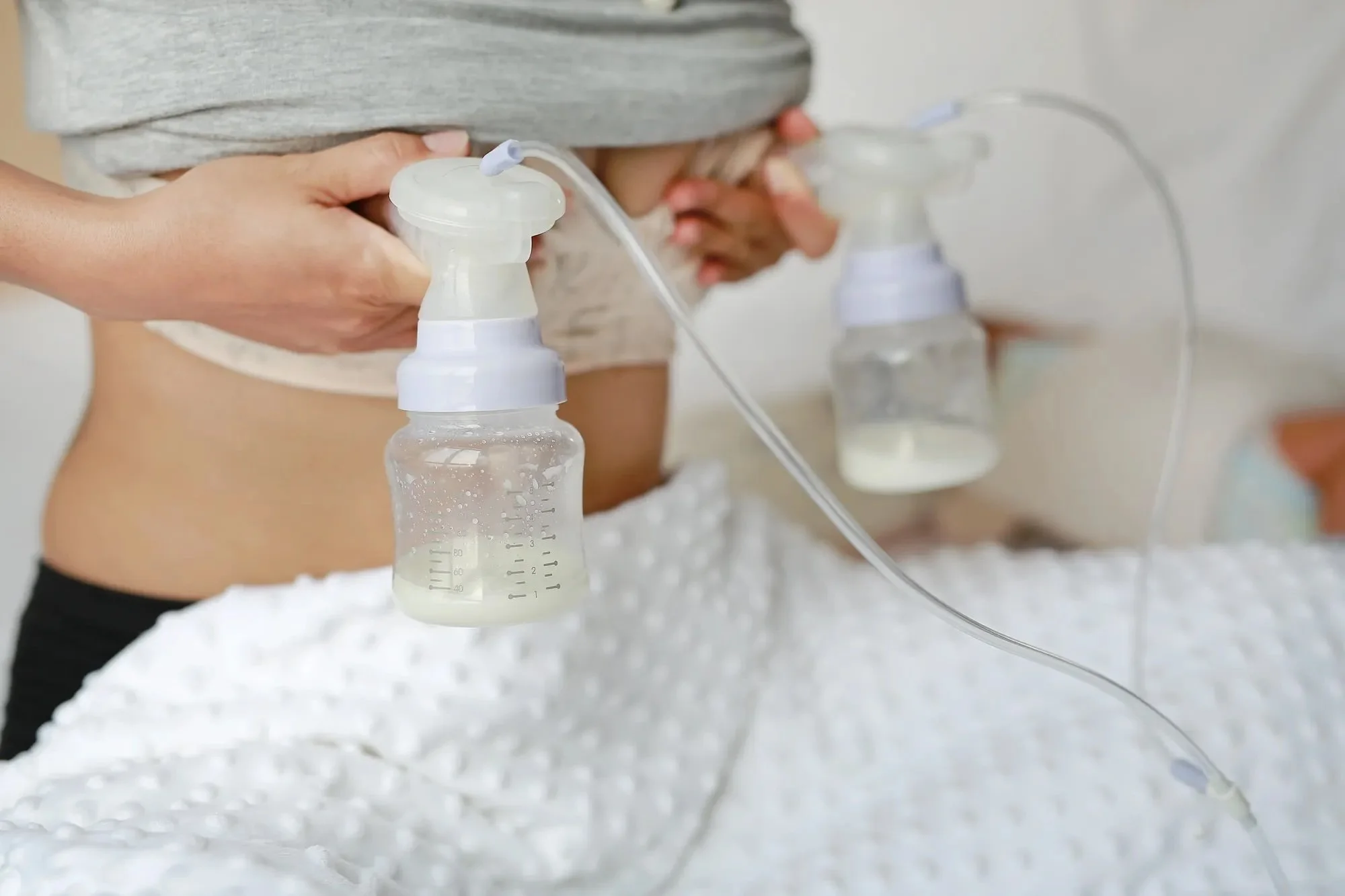
Your pump parts may also be part of the problem. Small parts like valves, membranes, duckbills, tubing, and backflow protectors wear out over time. When they do, suction can become weaker, even if the pump motor still sounds normal. If your output drops suddenly, your suction feels different, or your parts look stretched, loose, torn, or warped, it may be time to replace them.
Find Comfortable, Effective Settings
Pump settings matter too. Many parents assume stronger suction means more milk, but that is not always true. If suction is painful or causes you to tense up, it can make letdown harder.
The goal is not the highest suction — it is comfortable, effective suction.
Look at Your Pumping Schedule
Your schedule can also affect how well you empty. Some parents can go longer between milk removals and still pump comfortably. Others need to remove milk more often to avoid feeling overly full or to maintain supply.
If you often feel full after pumping or notice clogged areas, your body may need more frequent milk removal rather than simply longer sessions.
Consider the Type of Pump You Are Using
The type of pump you are using can matter too. Wearable pumps can be incredibly convenient, but they do not work equally well for every body. Some parents get great output with them. Others find that they remove less milk, especially if the pump shifts, the flange fit is not ideal, or the motor is not strong enough for their needs.

What to Try First
So what should you try first?
Start with the basics: check your flange size, replace worn pump parts, make sure your flange is centered, use comfortable suction, try triggering a second letdown, and add gentle breast compressions. You may also want to look at how long you are going between pumping or nursing sessions.
If these changes help, the issue was likely milk removal — not necessarily milk production.
When to Reach Out for Support
It is also a good idea to reach out for lactation support if pumping hurts, your output suddenly drops, you feel full after most sessions, you are getting recurrent clogged areas, one breast is not responding well, or you are exclusively pumping and worried about supply.
And if you have fever, body aches, significant redness, severe breast pain, or flu-like symptoms, contact your healthcare provider promptly.
The Bottom Line
The bottom line is this: if your pump is not emptying you, there is usually a reason — and often, there are simple changes that can help.
At Milk in Motion, we can help you troubleshoot your pump setup, assess flange fit, review your pumping schedule, and create a plan that supports your feeding goals.